Rufen Sie uns jederzeit an
+8613570976228


Application of Sodium Hypochlorite Generators to Replace Chlorine Gas in Water Treatment Plants
As a traditional drinking water disinfection process, liquid chlorine has been widely adopted in water plants in China and overseas regions for a long time due to its cost advantages. Nevertheless, liquid chlorine is a highly toxic hazardous chemical with substantial safety risks in transportation, storage and dosing. On-site sodium hypochlorite disinfection technology using sodium hypochlorite generators produces sodium hypochlorite disinfectant via electrolysis of low-concentration brine, which can directly replace liquid chlorine for water sterilization, algae removal, oxidative ammonia nitrogen removal and other functions. It has become the mainstream solution for disinfection system upgrading and retrofitting of water plants at present. This paper compares liquid chlorine and on-site sodium hypochlorite generation processes, elaborates the working principle, advantages, key engineering application points and limitations of sodium hypochlorite generators, so as to provide reference for water plants in disinfection process renovation and equipment selection.
Drinking water disinfection serves as the final barrier to guarantee water supply quality and safety. With mature technology and low unit chemical cost, chlorine (liquid chlorine) disinfection has long been the preferred disinfection process for large and medium-sized water plants. Liquid chlorine cylinders are major hazard sources. Once leakage occurs, it may lead to poisoning, corrosion and even explosion accidents, posing threats to on-site personnel and surrounding residential environments. Along with tightened regulatory control over hazardous chemicals, especially for overseas projects where some water plants are located close to residential areas, approval for liquid chlorine storage and transportation has become increasingly difficult. A large number of new water plant projects and retrofitting projects of existing plants have started to adopt on-site sodium hypochlorite generators to replace liquid chlorine disinfection.
Sodium hypochlorite and chlorine share essentially identical disinfection mechanisms: after dissolving in water, hypochlorous acid (HClO) is generated. Relying on its strong oxidizing property, hypochlorous acid damages microbial cell membranes and enzyme systems to inactivate bacteria, viruses and algae. Both processes produce basically the same disinfection by-products and can meet the requirements of national drinking water standards on disinfection by-products and residual chlorine indicators.
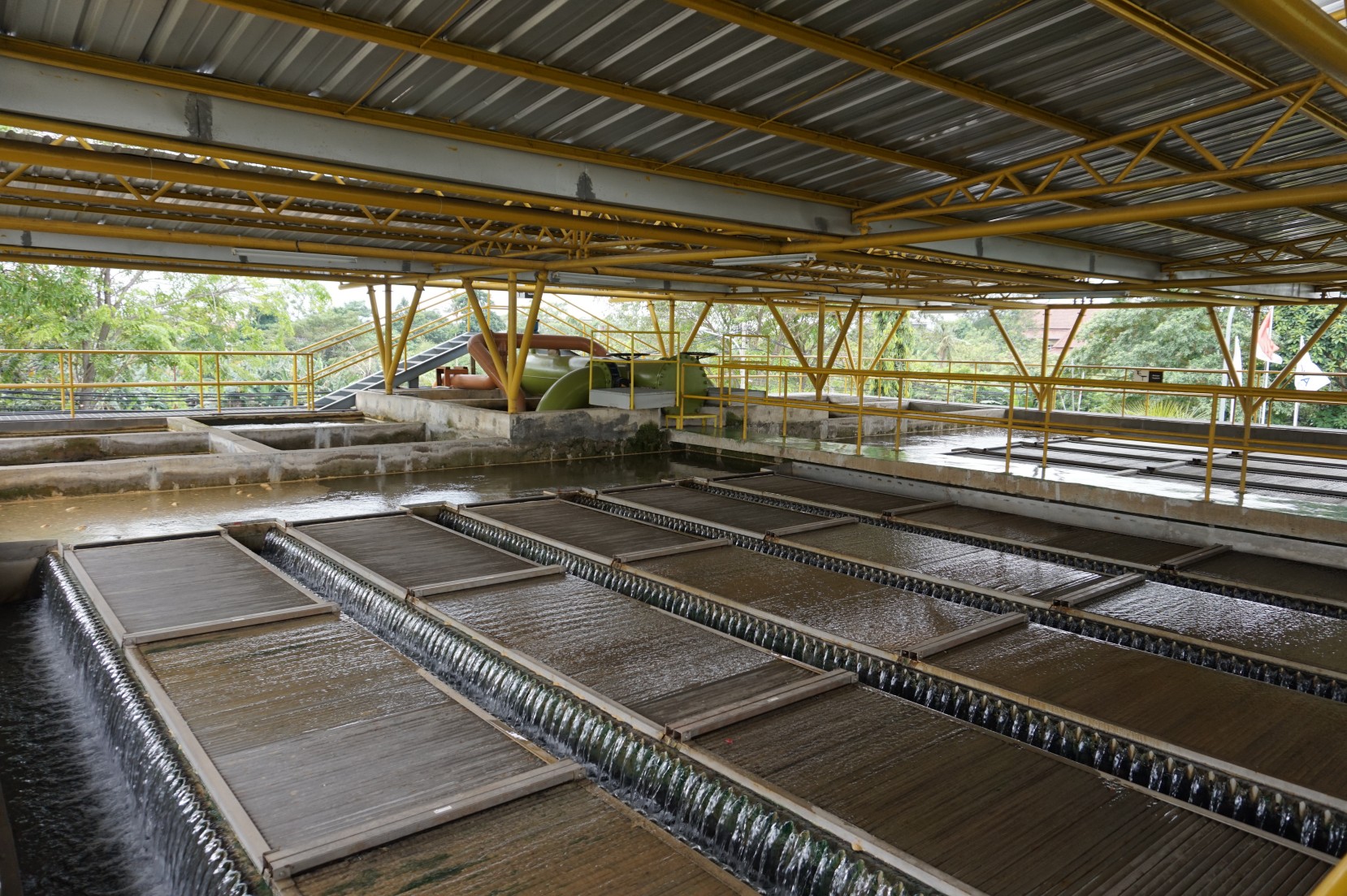
The core unit of a sodium hypochlorite generator is the electrolytic cell. Using dilute salt water (prepared by dissolving NaCl salt) as raw material, electrochemical reactions take place under low-voltage DC electric field: Anode: {2Cl- - 2e- = Cl2} Cathode: {2H2O + 2e- = H2↑ + 2OH-} Inside the electrolytic cell, chlorine reacts rapidly with hydroxide to form sodium hypochlorite: {Cl2 + 2OH- = Cl- + ClO- + H2O}
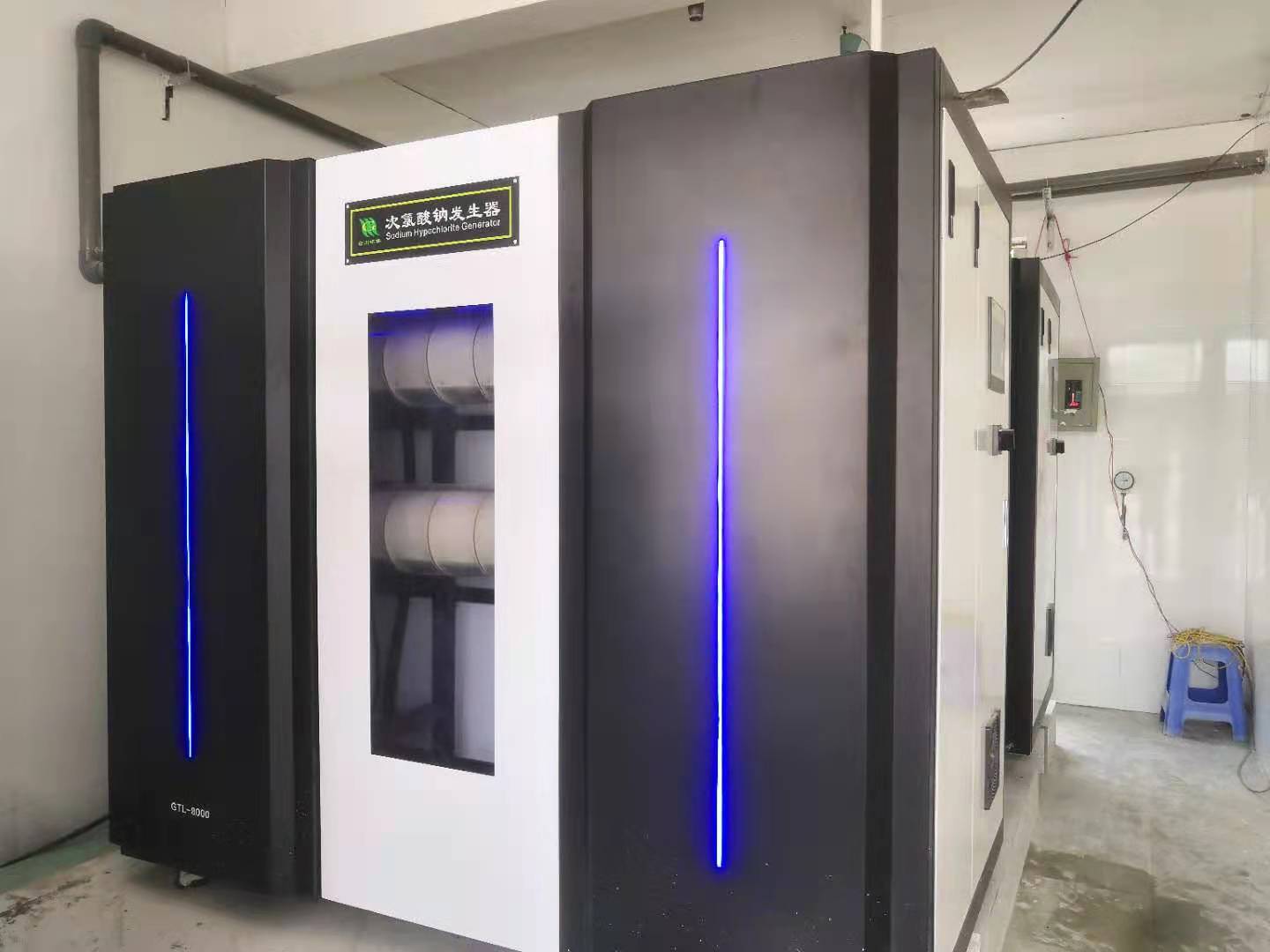
The complete system consists of salt dissolving unit, brine proportioning unit, electrolytic cell, rectifier power supply, sodium hypochlorite storage tank, hydrogen venting system, dosing pipeline, PLC automatic control system and supporting instruments (liquid level, residual chlorine, flow rate, temperature). The equipment locally generates low-concentration sodium hypochlorite solution (generally 0.6%~0.8%). The disinfectant is produced for immediate use, eliminating the need for long-distance transportation and bulk storage of hazardous chemicals.
Key difference: Liquid chlorine is high-purity chlorine stored as pressurized liquid in cylinders; generators produce disinfectant on site by electrolysis of salt, and no large volume of high-purity chlorine is stored within the system.
Once damaged, liquid chlorine cylinders leak chlorine gas which spreads rapidly and is highly toxic. Emergency response is complicated, requiring dedicated chlorine storage rooms, chlorine absorption and neutralization devices, gas-proof protective equipment, and strict safety spacing requirements for plant sites.
Sodium hypochlorite generators only use salt as raw material (a common chemical not classified as highly toxic hazardous material). The product generated on site is low-concentration aqueous sodium hypochlorite solution. Although sodium hypochlorite is corrosive, leakage only causes local corrosion without risk of large-scale diffusion of toxic gas. The safety distance requirement for plant sites is lower, which is especially suitable for retrofitting old water plants and water supply projects near residential areas (such as the booster station).
The full lifecycle of liquid chlorine procurement, transportation, storage and usage requires hazardous chemical operation licenses, special safety assessments, annual emergency drills and certified safety officers. Overseas projects additionally require local hazardous goods transport permits with cumbersome formalities.
Salt procurement, storage and transportation are simple and not subject to strict hazardous chemical control, which greatly simplifies security and filing procedures and cuts manpower input for safety management.
Sodium hypochlorite generators are equipped with PLC and online residual chlorine analyzers. The electrolysis current can be automatically adjusted according to outlet water flow and residual chlorine value to match chemical output, realizing closed-loop control. The dosing logic is similar to liquid chlorine dosing, and original dosing pipelines can be reused with simple modification. Under fluctuating water quality and variable flow conditions, the residual chlorine of effluent can be stably controlled to maintain residual chlorine in the pipe network.
New small and medium-sized water plants; retrofitting of liquid chlorine systems in existing plants; remote areas and overseas water supply projects where liquid chlorine transportation is difficult and cylinder replenishment cycles are long. Sodium hypochlorite generators only require salt and electric power, and raw material supply is convenient, making them suitable for remote dosing stations such as the Kalundu Booster Station.
Liquid chlorine has a lower cost per unit of available chlorine. Sodium hypochlorite generators consume salt and electricity, and electrode wear occurs during operation. Therefore, long-term operation and maintenance costs are higher than liquid chlorine. For large-scale water plants, full life-cycle economic comparison is required.
1. Sodium hypochlorite is strongly corrosive. Materials for wetted valves, pipelines and storage tanks must be resistant to sodium hypochlorite (such as FRP, CPVC, titanium, PVDF). Ordinary carbon steel and conventional epoxy resin cannot withstand long-term immersion and corrosion by sodium hypochlorite.
2. Hydrogen is generated during electrolysis. A reliable hydrogen exhaust and ventilation system must be equipped to strictly control hydrogen concentration in the electrolysis room and prevent hydrogen accumulation and explosion.
3. Brine is prone to crystallization. Salt scale may form on pipelines and valve components, requiring periodic pickling for descaling. Maintenance frequency is higher than liquid chlorine systems.
Both processes generate disinfection by-products such as trihalomethanes. The raw sodium hypochlorite solution contains a small amount of chlorate. Improper equipment selection and operating parameters may lead to excessive chlorate in treated water. It is necessary to control electrolysis temperature and retention time, select high-quality electrolytic cells, optimize the storage period of disinfectant tanks, and reduce chlorate formation caused by sodium hypochlorite decomposition.
1. Process review: Calculate the maximum water flow of the water plant and required available chlorine dosage to determine the production capacity of sodium hypochlorite generators and the volume of storage tanks.
2. Building renovation: Construct a dedicated generator room with anti-corrosion treatment, ventilation, hydrogen discharge and ground anti-seepage. Set independent areas for salt dissolving and chemical storage.
3. Automation and instrument retrofitting: Retain original effluent residual chlorine and flow instruments, connect to the generator PLC system to realize automatic chemical production and automatic dosing. Complete I/O interlocks: high/low liquid level, fan interlock, communication fault, emergency stop, hydrogen exhaust wind pressure monitoring, etc.
4. Material upgrade: Storage tanks, pressure relief valves, motorized valves and pipelines shall all adopt materials resistant to sodium hypochlorite corrosion.
5. Personnel training: Provide special training for operation and maintenance personnel covering electrolysis equipment, brine preparation, hydrogen safety and pickling maintenance.
6. Commissioning: Complete interlock testing, chemical production calibration and closed-loop residual chlorine tuning. Implement phased switching; the old and new systems can run in parallel for a short period to ensure uninterrupted water supply.
On-site sodium hypochlorite generation technology can effectively replace liquid chlorine for water plant disinfection. Its disinfection mechanism and performance can meet drinking water standards. Its core value lies in eliminating major safety risks of liquid chlorine cylinder leakage and reducing the management pressure of hazardous chemicals. It shows strong promotion potential in domestic and overseas water plants, especially in safety-sensitive zones and overseas water supply projects.
However, replacement is not a simple chemical substitution. Construction investment, electricity and salt consumption, maintenance workload, equipment corrosion, hydrogen safety and chlorate by-product risks must be comprehensively assessed. Sodium hypochlorite generators have prominent advantages for small and medium-sized water plants and booster stations. For large water plants, comprehensive demonstration combining water quality and plant scale, economic cost is needed. Proper equipment selection, optimized design and standardized operation and maintenance are required to smoothly complete liquid chlorine process upgrading while ensuring water supply safety.
Copyright @ Esegen (Guangzhou) Technology Co., Ltd Alle Rechte vorbehalten.
 Netzwerk unterstützt